
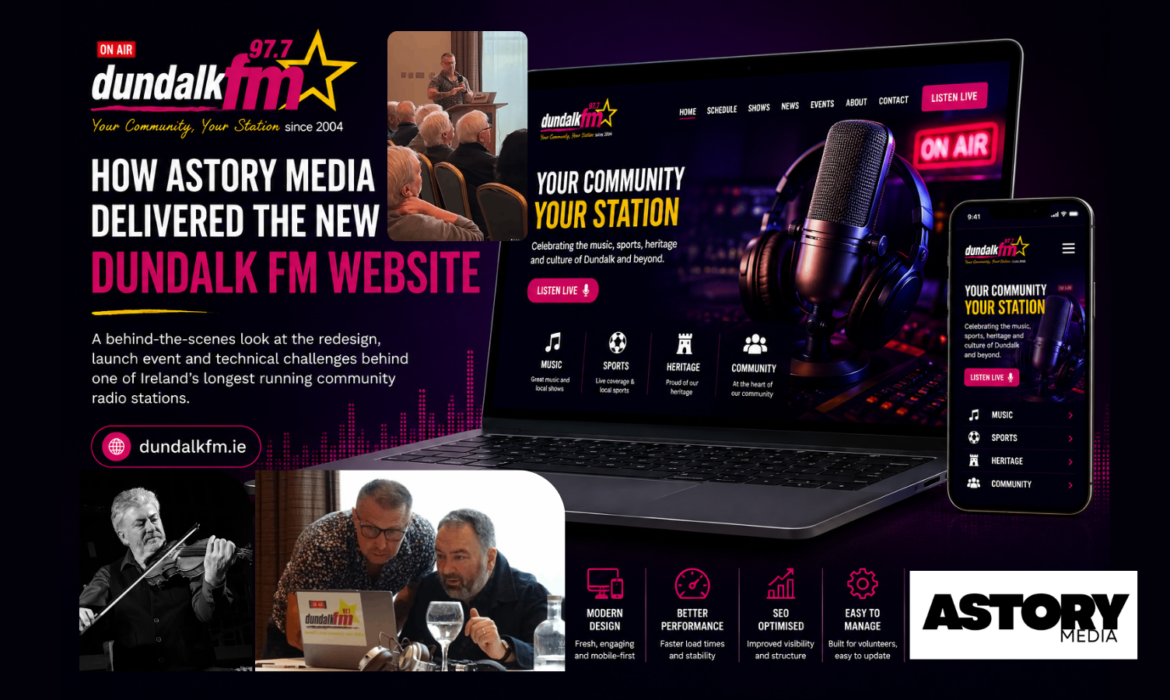
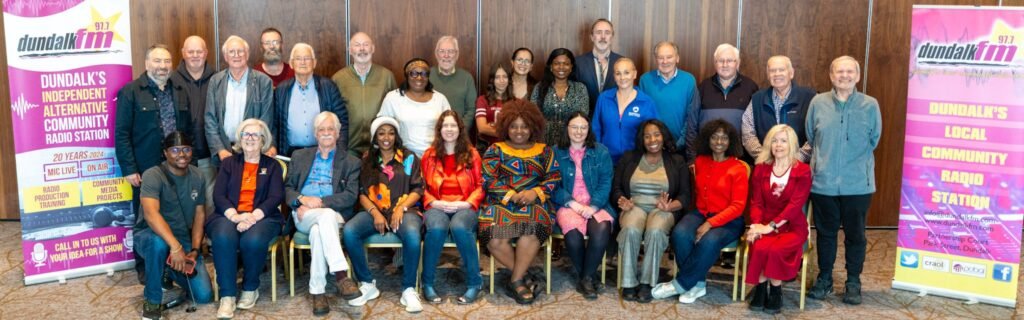
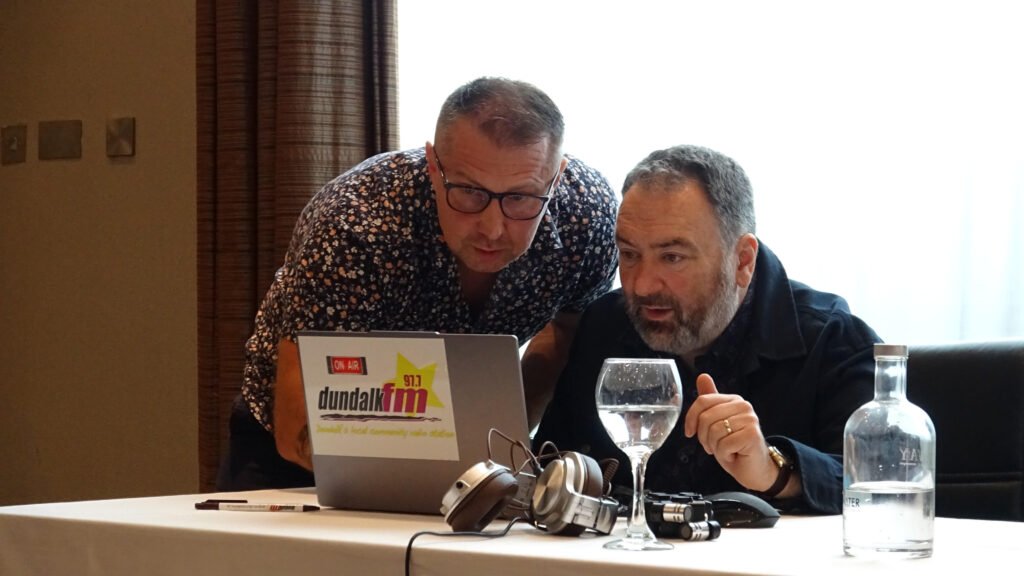
On a Friday morning in June 2026, the Tallon Room at the Gateway Hotel in Dundalk opened its doors to committee members, funders, fellow broadcasters and long-time supporters of Dundalk FM. There was no formal seating plan and no single big reveal moment. Instead, guests were invited to drop in any time between 10.15am and 12.30pm to see the station’s brand new website in action.
The station’s own community affairs programme, Town Talk, hosted by Cathal McCooey, broadcast live from the room from 10am until midday, with guests and music, giving visitors a rare chance to watch community radio happening in real time while getting a first look at the new website.
Zane from Astory Media, who led the build, was on hand throughout the morning to walk people through the site: the new programme schedule, photo pages for the station’s presenters, and a brand new feature that lets listeners send a request or dedication straight to the studio over WhatsApp.
At a Glance
- Client: Dundalk FM, 97.7FM
- Location: Dundalk, Co. Louth
- Broadcasting since: 2004
- Services: Website design, content structure, SEO foundations
- Launch event: Tallon Room, Gateway Hotel, Dundalk – Friday morning drop-in, June 2026
- Supported by: Coimisiún na Meán Social Benefit Scheme
About Dundalk FM
Dundalk FM is a not-for-profit, independent community radio station broadcasting to Dundalk and County Louth on 97.7FM. The station has been on air since 2004, making it one of the longest running community radio projects in Ireland and a genuine fixture of local life in Dundalk.
Like most community stations, Dundalk FM is run almost entirely by volunteers. Presenters give up their evenings and weekends to produce shows on everything from local news and sport to specialist music programming and community affairs, including the station’s Town Talk programme. The station has long operated with support through the Community Services Programme, reflecting its role as a genuine community development organisation rather than a commercial broadcaster.
That volunteer-driven, community-first identity was something we kept front of mind throughout the project. Whatever we built had to work for a small, busy team of volunteers, not a full-time in-house digital department.
The Challenge
Dundalk FM’s previous website had served the station well for a long time, but it was showing its age. Rather than list generic problems, it’s worth being specific about what we actually found and fixed.
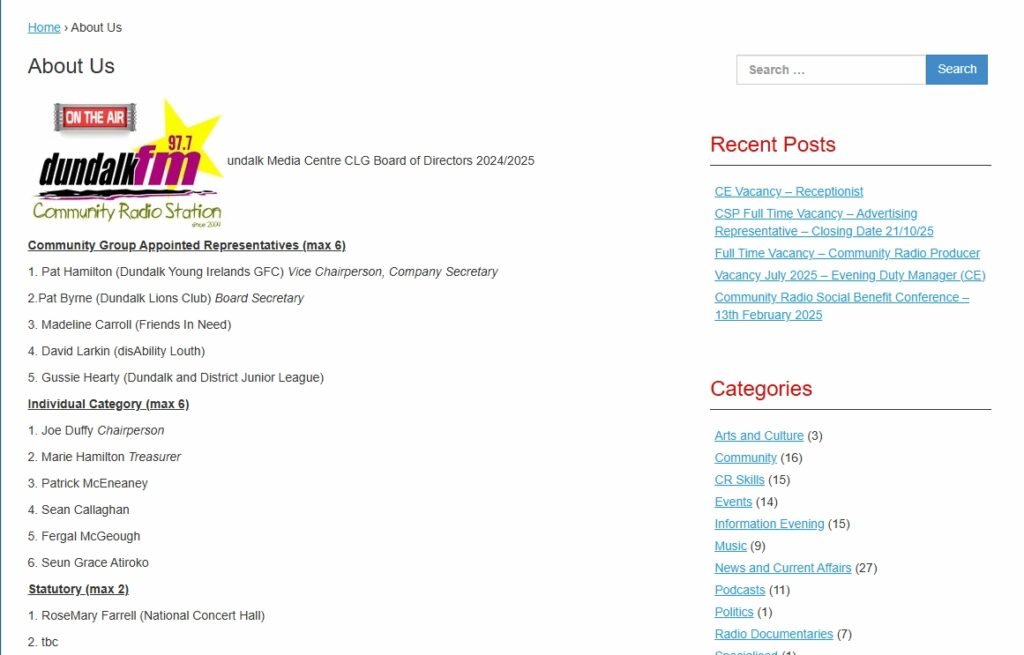
The design itself was dated: a cluttered top navigation with a long list of menu items, small text, and a layout built for desktop screens from an earlier era of the web.
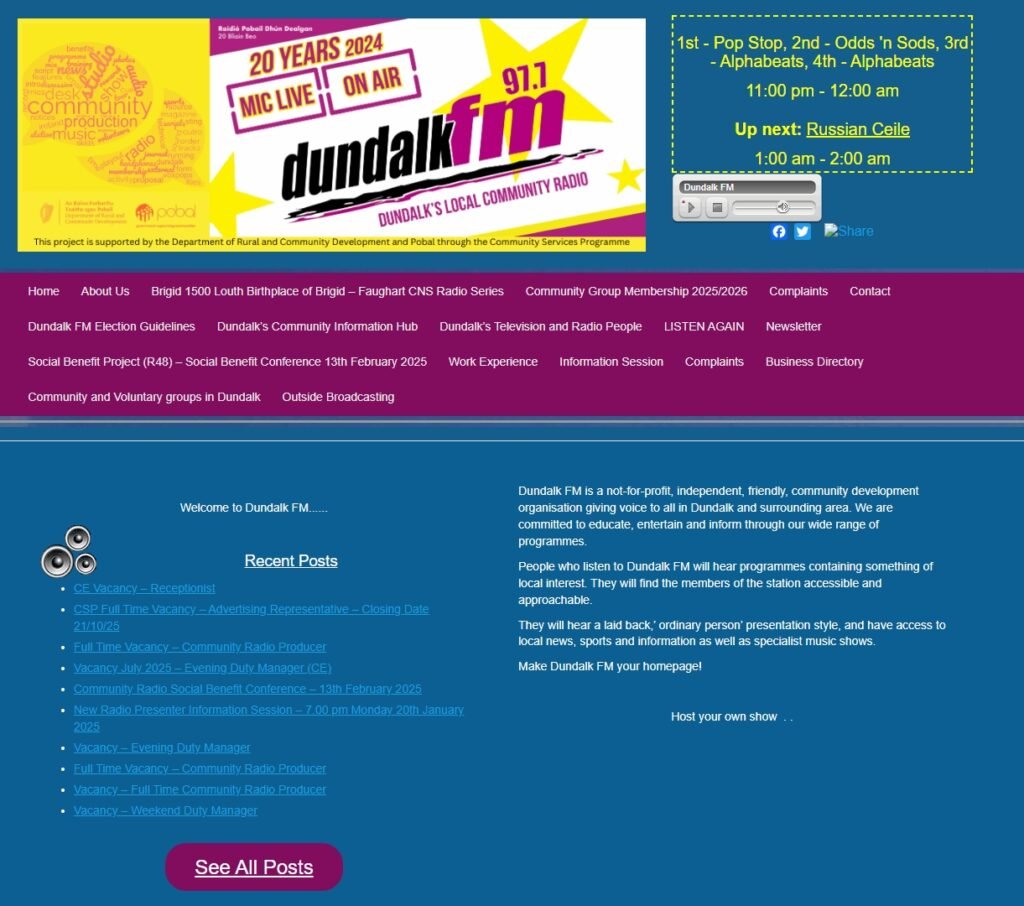
On a mobile phone, which is how most listeners now browse, the experience was cramped and difficult to use. Given how much local audio and radio content is now discovered and shared through phones, this was a real barrier between the station and its audience.
Behind the scenes, the site was genuinely difficult to update. Making even simple changes, such as updating the programme schedule or adding a news item, required more technical knowledge than a volunteer team should reasonably need. That meant updates happened less often than they should have, and some information on the site became stale.
There was no dedicated, organised space for podcasts, so past shows and recordings were hard to find even for people who already knew they existed. News updates, community information and vacancy notices were mixed together in a single list, which made it hard for visitors to quickly find what they were looking for.
There was also no clear, simple way for local businesses to find out how to advertise with the station, despite advertising being an important source of income for a not-for-profit broadcaster. And there was no way at all for a listener to reach the studio directly while a show was on air.
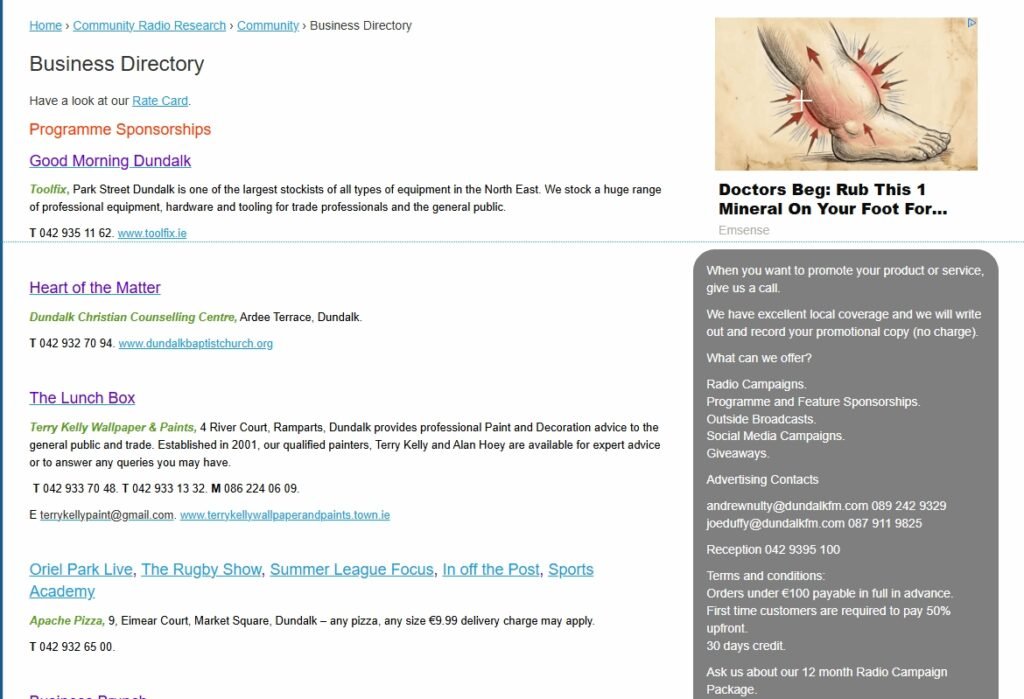
Finally, the site had accessibility gaps and slower load times than we’d expect from a modern website, largely a result of years of incremental changes on top of an old platform rather than any one single issue. None of this was a criticism of the people running the station. It’s simply what happens to most community websites after a decade or more of being maintained on a shoestring, by volunteers with limited time and no dedicated web budget.
Our Approach
We started, as we do with every project, by listening rather than designing. Zane, who led the project for Astory Media, ran a series of discovery meetings with the Dundalk FM committee and key volunteers to understand who actually uses the website: listeners checking the schedule, local businesses looking to advertise, community groups looking for information, presenters, and people considering getting involved with the station themselves.
From there, we mapped out a clear information architecture. Rather than one long, undifferentiated menu, content was grouped logically around those real user journeys: listen and schedule, news, podcasts, community and involvement, advertising, and contact. The goal was that anyone landing on the site, regardless of why they came, should be able to find what they needed in one or two clicks.
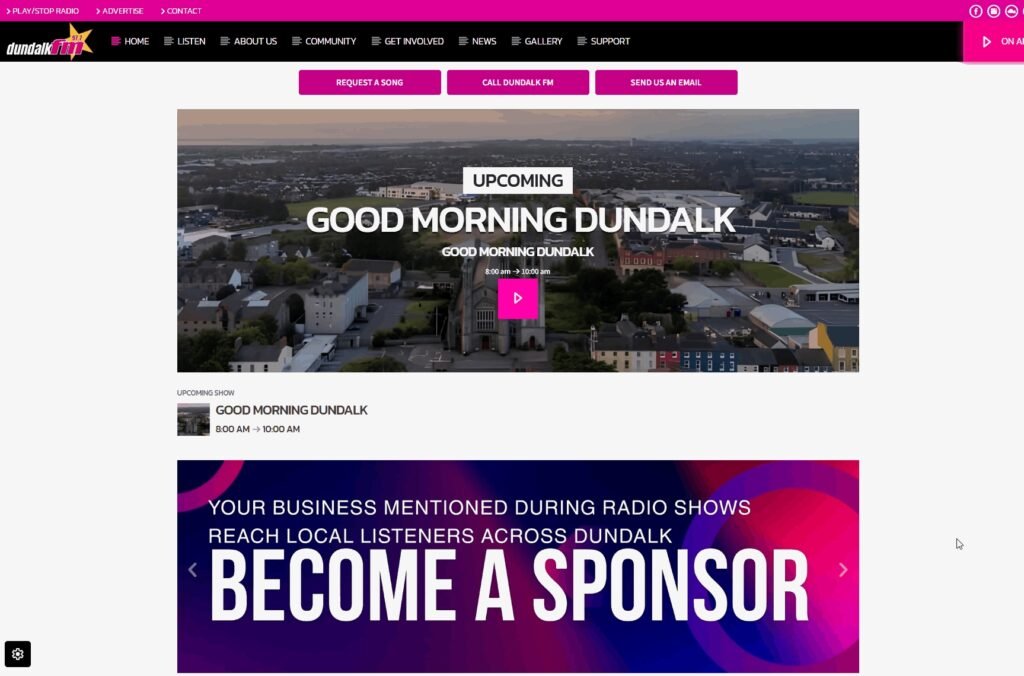
We rebuilt the site mobile-first, designing for a phone screen before scaling up to tablet and desktop, since that’s how the majority of visitors actually arrive. Pages were rebuilt for speed, with optimised images and a leaner, modern codebase in place of years of accumulated legacy elements. Navigation was simplified into a clean, uncluttered structure, and we put proper SEO foundations in place from day one: clean URLs, structured headings, optimised metadata and image alt text, so that search engines can properly understand and index the station’s content going forward.
Just as importantly, we rebuilt the site so that Dundalk FM’s director could manage it without needing a developer to a certain level indeed. We set everything as it should be and from now on its mangeable even with less technical know-how..
Updating the programme schedule, publishing a news story or adding a podcast episode is now a straightforward task rather than a technical challenge, which matters enormously for a station.
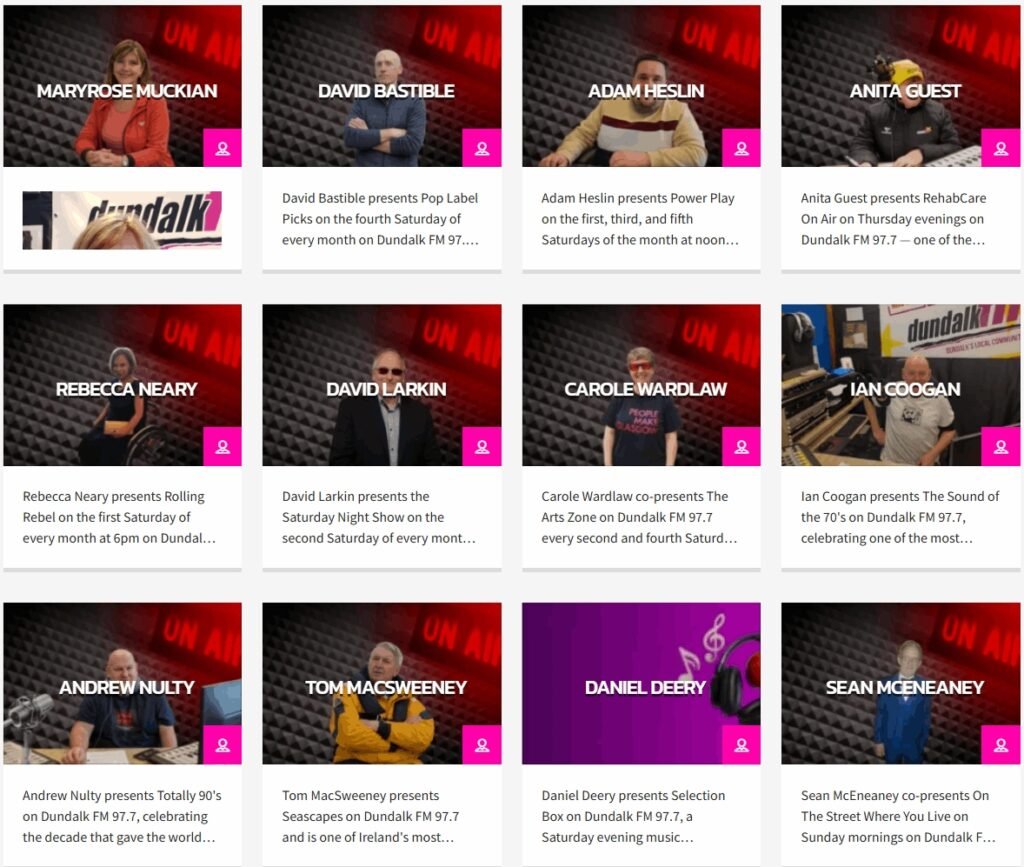
We also added presenter photo pages, so listeners can put a face to the voices they hear on air, and built a brand new WhatsApp request and dedication feature so listeners can message the studio directly, right from the site.
Launch Day
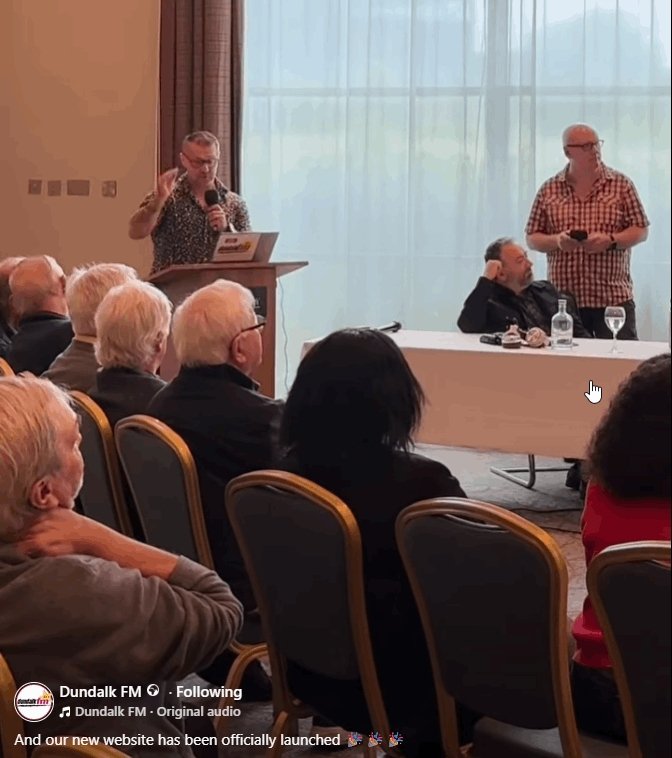
The new website was officially unveiled at a launch event held in the Tallon Room of the Gateway Hotel, Dundalk, supported by the Coimisiún na Meán Social Benefit Scheme. Rather than a single formal unveiling in front of a seated audience, Dundalk FM opened the room for two and a half hours on the Friday morning and invited people to call in whenever suited them.
Town Talk, the station’s community affairs programme hosted by Cathal McCooey, broadcast live from 10am to midday with guests and music, so the event doubled as a genuine piece of community radio as well as a website launch.
Adding to the atmosphere was renowned Irish fiddle player Gerry O’Connor, who performed a selection of traditional Irish tunes throughout the morning as guests arrived and explored the new website. His live performance brought a distinctly local and cultural feel to the event, reflecting Dundalk FM’s strong connection with the community and Irish heritage. As the launch reached its key moment, Gerry introduced the official unveiling with a celebratory drumroll, creating a memorable start to the presentation as Zane from Astory Media revealed the new website. It was a simple but fitting touch that gave the launch a genuine sense of occasion.
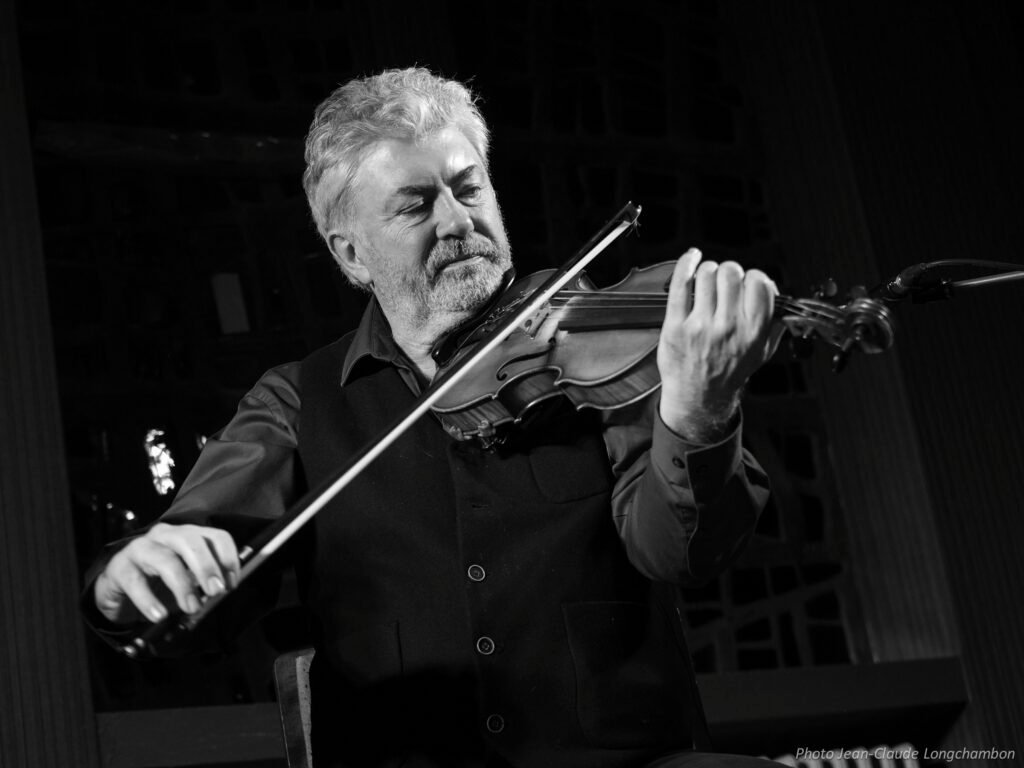
Alongside the broadcast, Zane from Astory Media was on hand to demonstrate the new site, showing visitors the redesigned schedule, the new presenter photo pages, and the WhatsApp request-and-dedication feature that now lets listeners message the studio directly.
The response over the course of the morning was genuinely warm. People who had used the old site for years were pleasantly surprised by how much cleaner and simpler things had become, and there was a real sense of pride among everyone who dropped in that a station with such a long history now had a website, and a studio, worth showing off. For us, demonstrating the work directly to the community it serves, rather than to a single client contact, was a memorable and rewarding way to close out the project.
The Difficult Part Nobody Saw
Every honest case study should include the part that didn’t go smoothly, so here it is. Like many large website projects, the final days before launch brought an unexpected technical challenge. Actually just about 4 hours before the launch!
Changes to caching and CDN behaviour caused styling issues to appear intermittently across the site, the kind of problem that can make a finished, tested website suddenly look broken with no obvious single cause.
Rather than delaying the launch, our team worked through the problems, tested every page and delivered the finished website in time for the public presentation.
With a public launch event already booked and invitations sent, delaying wasn’t a real option. Rather than push the date back, our team worked through the problem methodically, tracing the issue back to how caching and content delivery were interacting with the new site, testing every page individually, and correcting the affected styling until the whole site was verified and stable.
It’s the kind of problem that never appears in a portfolio screenshot, but it’s exactly the kind of problem that separates a website being technically finished from a website being genuinely ready to put in front of a room full of people. The site was fully tested and stable in time for the Friday morning event, and nobody who dropped into the Tallon Room had any idea how close the previous few days had come to being stressful for entirely different reasons.
Features of the New Website
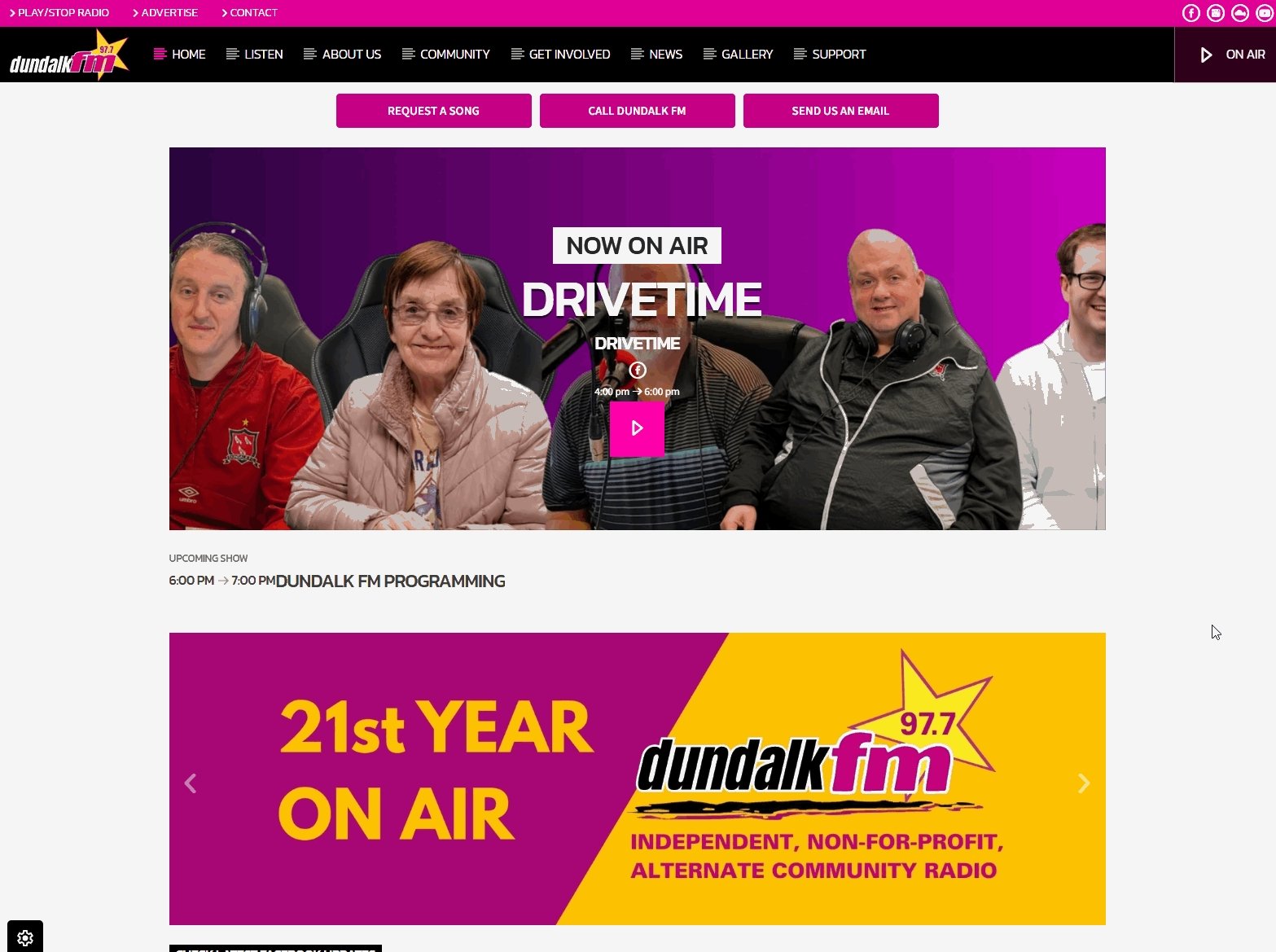
Homepage
A clean, modern layout that immediately shows what’s on air, who’s presenting, and what’s coming up next, alongside quick links to listen live. There’s now a persistent, easy-to-find live radio player, so listeners can tune in from anywhere on the site without hunting for a link.
News & Podcasts
Local news, station updates and vacancies are now presented clearly and separately, instead of being mixed into one long feed. Podcasts have a dedicated, browsable library, so past shows and segments are easy to find rather than scattered through old posts.
One of the standout new additions is the ability to send a request or dedication straight to the studio over WhatsApp, right from the website. It’s a small feature, but it turns the site into a live, two-way link between listeners and presenters rather than a static brochure, and it landed on launch morning while Town Talk was on air taking exactly that kind of message from listeners.
The rest of the rebuild follows the same thinking throughout:
- Programme schedule – a properly organised, easy-to-scan schedule that replaces the old cluttered listings.
- Presenter pages – photo profiles for the station’s presenters, so listeners can put a face to the voices they hear on air.
- WhatsApp requests & dedications – a direct line from listener to studio, built straight into the website.
- Community pages – information for local community and voluntary groups, reflecting Dundalk FM’s role as a community development organisation.
- Advertise with us – a clear, simple path for local businesses to understand how to advertise with the station.
- Contact – straightforward contact options for listeners, presenters and businesses alike.
- Mobile experience – a fully mobile-first rebuild, so the site works properly on the phones most visitors actually use.
“For a community station broadcasting since 2004, this wasn’t simply the launch of a new website. It marked the beginning of a new chapter in how Dundalk FM connects with listeners, volunteers and local businesses.”
Results
The new Dundalk FM website has only just launched, so it’s early days in terms of long-term data. Even so, the improvements are already clear and measurable in the way the site looks, feels and functions.
- Simpler, more logical navigation built around how visitors actually use the site.
- Faster page loading thanks to a modern, lean build in place of years of accumulated legacy code.
- A properly usable mobile experience, designed mobile-first rather than as an afterthought.
- Content management that Dundalk FM’s own volunteers can handle directly, without technical help.
- A new, direct line between listeners and the studio via WhatsApp requests and dedications.
- Solid SEO foundations, including clean URLs, structured headings and optimised metadata, ready to build on over time.
- A future-ready platform that can grow with the station rather than needing to be rebuilt again in a few years.
We’ll be keeping an eye on the site’s performance over the coming months and will share real traffic and engagement figures once there’s a meaningful amount of data to report.
What Dundalk FM Had to Say
We asked Dundalk FM for a few words. This section will be updated once we receive their feedback via email.
Dundalk FM
Why Dundalk FM Chose Astory Media
Dundalk FM wasn’t looking for the cheapest website. They wanted a partner who understood the needs of a volunteer-led organisation, could build a site that was easy to manage, and would be there on launch day to stand behind the work. That’s the approach we bring to every project, whether we’re working with a community radio station or an established business.
About Astory Media
Astory Media is a Dundalk-based digital marketing agency helping established Irish businesses and organisations improve their visibility online. We work with clients across websites, SEO, Google Ads, photography and wider digital marketing, with the same approach Zane brought to Dundalk FM: understanding the real people behind a business before we design anything for them.
Every organisation has a story worth telling. Sometimes the first step is giving people a website that’s as good as the work happening behind it. If your organisation has outgrown its current website, we’d be happy to show you what’s possible.


