
Trust Infrastructure: Why Strong Businesses Lose Leads Before Buyers Ever Call
A strong business can still look weak online. When that happens, the problem is not only visibility. The problem is that buyers cannot see enough proof to feel certain.
That is where many established businesses are losing work they should be winning. The roofing company with better workmanship is outranked by a cheaper competitor. The dental clinic with stronger clinicians looks quieter than a newer practice with fresher reviews. The solicitor with decades of experience has a website that feels vague. The ecommerce brand with better products loses sales because the buying experience does not create enough confidence.
The business may be excellent. The market simply cannot see it clearly enough.
This is why modern marketing needs a better frame than "SEO", "ads", "content", or "a new website". Those are tools. What serious businesses actually need is trust infrastructure: the visible proof, search presence, reputation signals, website experience, and authority assets that make buyers believe before they enquire.
The commercial shift: buyers now judge your business before they speak to you. In AI search, local search, review platforms, and your website experience, your authority is being assessed before your sales process begins.
That shift is already visible. Google published new guidance in May 2026 on optimising for generative AI in Search, with emphasis on valuable, unique, non-commodity content, local information, shopping content, images, video, and the continued importance of sound SEO foundations. Around the same time, Google described new AI Mode and AI Overview features designed to help users explore the web through richer AI-assisted answers.
For established businesses, the message is clear. Being findable is no longer enough. You also need to be understandable, verifiable, and obviously credible.

Buyers Do Not Buy Marketing. They Buy Reduced Risk.
Most business owners describe the problem in practical terms.
- We need more enquiries.
- Leads have slowed down.
- We are too dependent on referrals.
- Competitors seem busier than us.
- Our Google presence is not strong enough.
- Our website does not show how good we are.
- We are attracting too many price shoppers.
Those are real problems. But underneath them is a deeper commercial issue: the buyer does not yet feel enough certainty.
A patient choosing a cosmetic clinic is trying to reduce risk. A homeowner choosing a roofer is trying to avoid a costly mistake. A company director choosing a solicitor wants competence and discretion. A procurement manager choosing an engineering partner wants proof that the supplier can deliver without creating problems. An ecommerce buyer wants enough reassurance to purchase without regret.
Price matters, but risk often decides. When a competitor looks more established, more reviewed, more current, and easier to trust, they can win the enquiry even if they are not the better business.
The New Authority Test Buyers Are Running
Buyers are not checking one signal. They are building a picture from many small clues. Reviews, Google presence, website depth, proof, photos, service clarity, response quality, and brand consistency all contribute to the same decision: "Do I trust this company enough to contact them?"
| Trust signal | What the buyer is really asking | Why it matters commercially |
|---|---|---|
| Recent reviews | Are customers still happy now? | BrightLocal's 2026 survey found 74% of consumers only care about reviews written in the last three months. |
| Review volume | Is this business proven across enough customers? | BrightLocal found 47% of consumers will not use a business with fewer than 20 reviews. |
| Star rating | Is this business consistently good? | 31% of consumers will only use a business with 4.5 stars or above, according to BrightLocal. |
| Website proof | Can I verify the quality behind the reviews? | BrightLocal reports that 54% of consumers check the business website after reading positive reviews. |
| Digital experience | Does this feel easy, clear, and credible? | Deloitte Digital's 2026 research found 57% of surveyed consumers are spending less, but expectations for strong experiences remain high. |
| Local credibility | Is this a serious business in my market? | McKinsey's 2025 research found 47% of consumers globally see locally owned companies as important to purchase decisions. |
Sources: BrightLocal Local Consumer Review Survey 2026, Deloitte Digital B2C commerce research 2026, and McKinsey State of Consumer 2025.
This is why "more traffic" is too small a goal. Traffic only matters if the buyer arrives into an environment that builds belief. If your website, Google profile, reviews, proof, and message do not support a premium decision, more traffic can simply create more low-quality enquiries.
Search Is Becoming A Trust Layer, Not Just A Results Page
For years, businesses treated Google as a list of rankings. That view is now too narrow.
Search is becoming a trust layer. Google is summarising, comparing, interpreting, and presenting businesses through more complex experiences. Buyers are seeing AI answers, review snippets, map packs, business profiles, images, videos, forum references, articles, service pages, and third-party mentions before they decide who deserves attention.
That creates a new problem for businesses with weak public signals. If your online presence is thin, inconsistent, or outdated, search systems have less high-quality evidence to work with. If your competitors have richer proof, clearer pages, stronger reviews, and more complete local signals, they may look like the safer recommendation.
This is not theoretical. On 11 August 2026, Business Insider reported on small businesses dealing with damaging or inaccurate AI summaries in Google results. In June 2026, the UK Competition and Markets Authority also imposed a publisher conduct requirement on Google Search, including requirements around how publisher content is used and attributed in generative AI features.
The lesson for business owners is not to panic about AI. The lesson is to make your authority easier to read. Clearer proof, better structure, stronger content, and more consistent public information give both people and search systems a better basis for understanding your business.
The Trust Infrastructure Framework
Most marketing plans are organised around channels. A stronger plan is organised around the questions a buyer must answer before they enquire.
Can the buyer find you in the places they already search, including Google, maps, organic results, local listings, review platforms, and relevant comparison moments?
Can they understand what you do, who you help, where you operate, and why your offer is different within seconds?
Can they see enough evidence to believe your claims, including reviews, case context, project examples, service depth, accreditations, team expertise, and process quality?
Does your website and public presence make your pricing feel justified, or does it accidentally place you in the same mental category as cheaper competitors?
Is the next step obvious, low-friction, and aligned with the kind of enquiry you actually want?
This is the part generic marketing advice often misses. You are not trying to win attention from everyone. You are trying to create enough certainty for the right buyer to choose you before they speak to three cheaper options.
What This Looks Like In Real Businesses
For a dental clinic, trust infrastructure might include treatment-specific pages, clinician profiles, review themes, transparent finance information, careful before-and-after policies, and a calm booking journey.
For a roofing company, it might include local service pages, proof of completed projects, warranty information, emergency response clarity, trade accreditations, review generation, and photos that show the quality of the work.
For a solicitor, it might include sector-specific service pages, partner visibility, plain English explanations, trust signals, case context where appropriate, and a website that feels as serious as the matters the firm handles.
For an ecommerce company, it might include stronger product information, better category pages, review depth, delivery clarity, returns confidence, comparison content, and a checkout experience that removes hesitation.
None of this is about making the business louder. It is about making the business easier to trust.
Astory Media Helps Businesses Become Visible Online
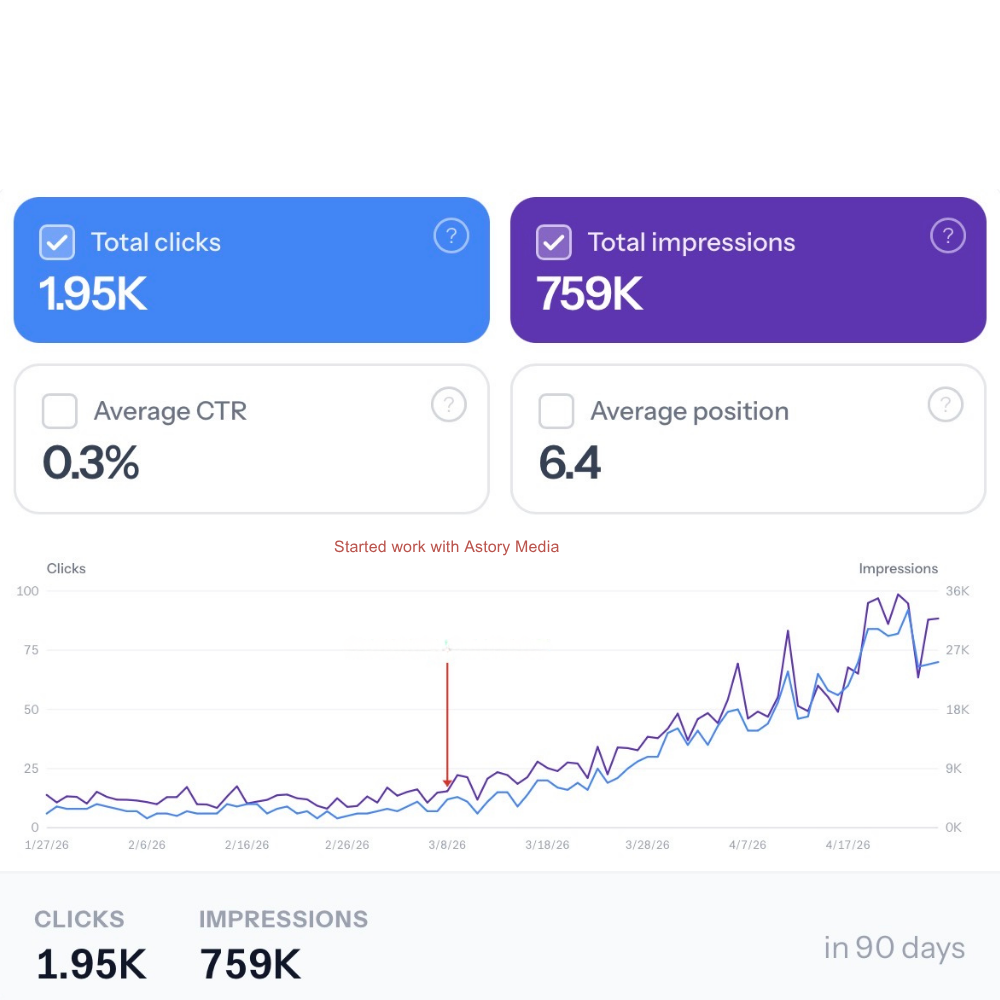
Illustrative example: A well-established local service business may already have strong workmanship, repeat customers, and referrals. But online, it may look ordinary: thin service pages, few recent reviews, inconsistent local listings, weak proof, and a website that does not separate it from cheaper competitors.
The authority opportunity is not to invent a better story. It is to uncover the proof already inside the business and present it properly. That can mean rebuilding the core website message, improving Google Business Profile visibility, developing stronger review systems, creating proof-led service pages, and aligning every public touchpoint around trust, competence, and premium positioning.
That is where Astory Media fits. We help strong businesses turn real-world capability into visible market authority.
Useful Astory Media internal links to add before publishing:
The Businesses That Win Will Be The Easiest To Trust
The next stage of digital competition will not be won by the business that publishes the most content. It will be won by the business that gives buyers the clearest reason to trust it.
That trust has to show up everywhere: in search, on Google Business Profile, across reviews, in website structure, in service pages, in proof, in images, in case context, and in the way the business explains its value.
If weaker competitors are getting more attention, the answer is not to copy them. The answer is to build a stronger authority layer than they can match.
Build Authority Before The Buyer Calls
If your business is stronger than it looks online, that is not a branding issue. It is a growth constraint.
Astory Media helps established businesses become more visible, more trusted, and more dominant in the markets they deserve to lead.


